Care training6 min read
How often does care training need renewing?
Most core care training is refreshed at least every 3 years, basic life support yearly. What is law, what is guidance, and what triggers an early refresh.

The short answer
Most core care training should be refreshed at least every three years, according to Skills for Care. Basic life support should be refreshed at least once a year, and first aid every three years. Only one renewal period is set in a statutory code: learning disability and autism training, which must be repeated at least every three years.
This guide follows guidance for adult social care in England. Other UK nations and other countries set their own rules, but many employers use similar intervals.
On this page
Is there a law that says how often care training must be renewed?
Mostly no. The law sets a duty, not a date.
Regulation 18 says staff must receive the training "necessary to enable them to carry out the duties they are employed to perform." CQC's guidance adds that training needs should be reviewed "at appropriate intervals" and that providers should monitor completion. Neither gives fixed refresh periods for most topics.
The fixed periods most employers use come from the Skills for Care statutory and mandatory training guide (December 2025). These are recommendations. CQC inspectors still expect you to show staff are up to date and competent.
The exception is learning disability and autism training. The Oliver McGowan code of practice, made under the Health and Care Act 2022, says providers must ensure staff retrain "at least every 3 years or more regularly if a member of staff requires it."

What are the recommended refresh periods?
This table summarises the Skills for Care guide.
Swipe the table sideways to see every column.
| Topic | Who needs it | Recommended refresh | Source type |
|---|---|---|---|
| Health and safety awareness | All workers | At least every 3 years | Guidance |
| Fire safety | All workers | At least every 3 years; fire drill at least yearly | Guidance |
| Moving and handling objects | All workers | At least every 3 years | Guidance |
| Infection prevention and control | All workers | At least every 3 years | Guidance |
| Adult safeguarding | All workers | At least every 3 years | Guidance |
| Child safeguarding | All workers | At least every 3 years* | Guidance |
| Learning disability and autism | All workers (CQC-registered services) | At least every 3 years | Statutory code |
| Basic life support | Workers identified as needing it | At least yearly | Guidance |
| First aid | Designated first aiders | Every 3 years | Guidance |
| Assisting and moving people | Workers who help people move | At least every 3 years | Guidance |
| Food hygiene | Workers who handle or prepare food | Every 3 years | Guidance |
| Medication administration | Workers who support with medicines | Review training and competency if no training within a year | Guidance |
\*Child safeguarding refresh applies if the worker has not achieved the Care Certificate standards or a recognised adult social care qualification in that time.
Does a qualification reset the clock?
Yes, for many topics. This is new in the December 2025 guide.
If a worker completes a recognised adult social care qualification that includes the topic, they "do not need to refresh for another three years from completion." Skills for Care says this is to reduce repeat learning.
So a senior carer who finishes a Level 3 Diploma covering safeguarding and infection control does not need separate refreshers in those topics for three years from completion.

When should training be refreshed early?
Refresh early when something changes. Skills for Care lists these triggers:
- a new risk or activity is introduced
- people's care and support needs change
- new equipment arrives
- the care environment changes
- teams change significantly
- legislation, guidance or policy changes
- the worker is no longer competent
For extra training an employer chooses, such as dementia or end of life care, Skills for Care sets no refresh period. The employer decides, using the same triggers.
Example. Tomasz is a support worker in a supported living service in Manchester. His adult safeguarding training is two years old. A new resident moves in whose support plan includes restrictive practices. His manager books him a safeguarding refresher now, rather than waiting for the three-year date.
Is training enough on its own?
No. Employers must also check staff are competent in practice.
Skills for Care says employers must "check and evidence that workers are competent to carry out their role on an ongoing basis." This includes observed checks on key tasks such as moving people and giving medication, plus informal checks like quizzes or supervision discussions. The employer sets how often, based on the task, and records it in its training policy.
Track all of this in one place. Our guide to building a care home training matrix shows how.
What about nurses?
Registered nurses have extra duties through Nursing and Midwifery Council (NMC) revalidation. Their workplace training follows the same employer rules above. See NMC revalidation: how to log your CPD.
Estimate. You’re charged in pounds (GBP); your bank sets the final rate.
FAQs
Does basic life support training need renewing every year?
Skills for Care recommends formal basic life support training "when identified or at least annually" for workers who need it. This is guidance, not law, but most CQC-registered employers follow it. First aid certificates are refreshed every three years.
My certificate has no expiry date. Is it still valid?
A certificate shows you passed on a set date. Your employer decides if it is current, usually using the Skills for Care intervals. Most treat core topics as due three years after the completion date, and basic life support one year after.
Can I do refresher training online?
Yes, for knowledge-based topics. Practical topics such as basic life support, moving people and medication also need hands-on practice and an observed competency check. Your employer decides the mix and records it.
Who is responsible for keeping my training in date?
In CQC-registered services, the provider is legally responsible under Regulation 18. In practice, managers track due dates and book refreshers. Keep your own copies of certificates so you can prove your training if you change job.
Next step
Refresh your core topics with free MySkillsPlace courses such as Basic Life Support, Fire Safety and Infection Prevention and Control. Pass with 70% or more for a £9.99 (est. US$13, an estimate. You are charged in pounds and your bank sets the final rate) certificate with a unique certificate number that employers can check at /verify. Employers can download the free care home training matrix.
Basic Life SupportSources
The official guidance this page is based on. Check the source for the latest rules.
- Statutory and mandatory training guide for adult social care employers, December 2025 (Skills for Care) (opens in a new tab)
- The Oliver McGowan code of practice on statutory learning disability and autism training (GOV.UK) (opens in a new tab)
- Regulation 18: Staffing (CQC) (opens in a new tab)
- Regulation 18, Health and Social Care Act 2008 (Regulated Activities) Regulations 2014 (opens in a new tab)
Related courses and pathways
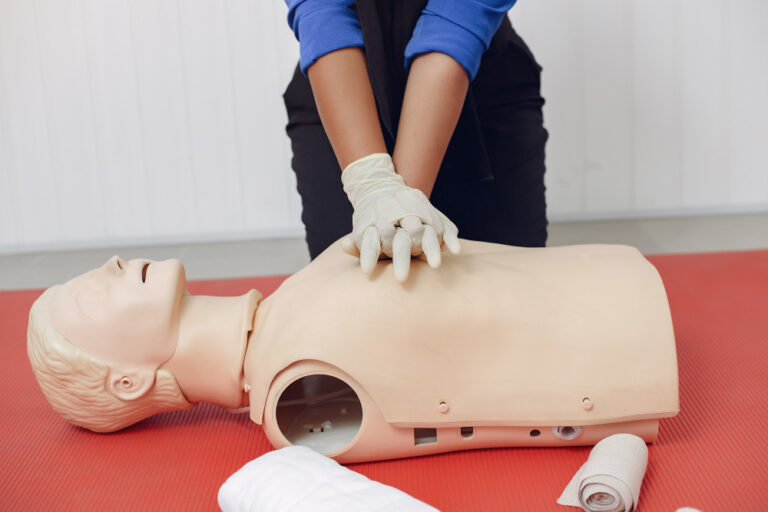 Course · HealthcareBasic Life SupportRespond to life-threatening emergencies with the core skills of basic life support.See the course: Basic Life Support
 Course · Health & SafetyFire SafetyFire prevention, risk assessment and emergency procedures at work and in care settings.See the course: Fire Safety
 Course · HealthcareLevel 2 Safeguarding (Adult)Recognise abuse and neglect, know your duties and follow the right reporting steps.See the course: Level 2 Safeguarding (Adult)
Keep reading

Care training6 min read
Funded and free training for care staff: what is available?
How the Learning and Development Support Scheme reimburses care employers in England, plus free e-learning options care staff anywhere can use.
Care training5 min read
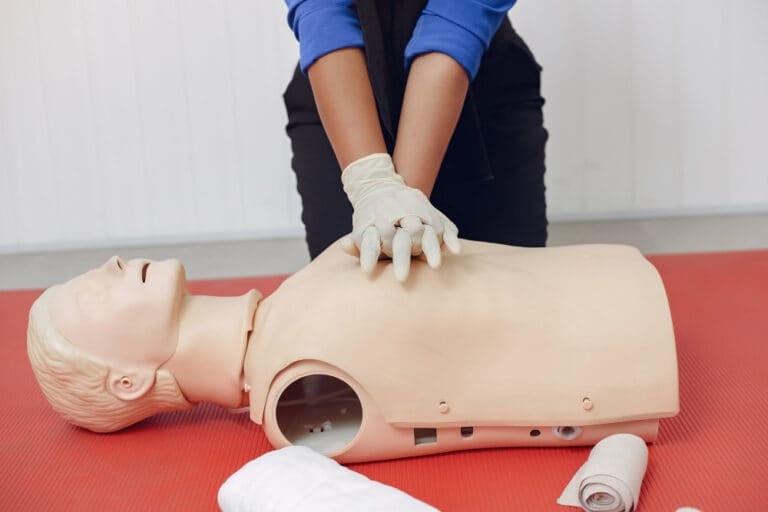
How often should staff refresh Basic Life Support training?
Resuscitation Council UK and Skills for Care both point to at least annual Basic Life Support updates. First aid certificates last three years.

Care training6 min read
Is the Care Certificate mandatory?
No law names the Care Certificate, but CQC-registered employers in England must give new care staff an induction. Here is what that means for you.

PDF2 CSV
Free download
The care home training matrix spreadsheet
See at a glance who is in date, who is due soon and who is overdue, for every worker and every course.


