Care training6 min read
Is the Care Certificate mandatory?
No law names the Care Certificate, but CQC-registered employers in England must give new care staff an induction. Here is what that means for you.

The short answer
No. No law says a care worker must hold the Care Certificate. But in England, the law does say a care provider registered with the Care Quality Commission (CQC) must give staff an induction and the training they need for their role, and the Care Certificate standards are the national benchmark employers use for that induction.
This guide covers England. Scotland, Wales and Northern Ireland have their own induction frameworks and workforce regulators.
On this page
Is the Care Certificate a legal requirement?
No, it is not written into law. The legal duty sits with the employer, not with the certificate.
Regulation 18 of the Health and Social Care Act 2008 (Regulated Activities) Regulations 2014 says staff must receive "support, training, professional development, supervision and appraisal" needed for their duties. CQC's guidance on Regulation 18 adds that providers "must ensure that they have an induction programme that prepares staff for their role."
The Care Certificate standards are how most employers in England meet that duty. The official guidance says the standards "can be used to support a robust induction process into the workplace." So in practice, if you start a care job in England, expect to complete them.

What are the 16 Care Certificate standards?
There are 16 standards. They were updated in March 2025, and a new standard on learning disability and autism was added.
Swipe the table sideways to see every column.
| No. | Standard | No. | Standard |
|---|---|---|---|
| 1 | Understand your role | 9 | Awareness of mental health and dementia |
| 2 | Your personal development | 10 | Adult safeguarding |
| 3 | Duty of care | 11 | Safeguarding children |
| 4 | Equality, diversity, inclusion and human rights | 12 | Basic life support |
| 5 | Work in a person-centred way | 13 | Health and safety |
| 6 | Communication | 14 | Handling information |
| 7 | Privacy and dignity | 15 | Infection prevention and control |
| 8 | Fluids and nutrition | 16 | Awareness of learning disability and autism |
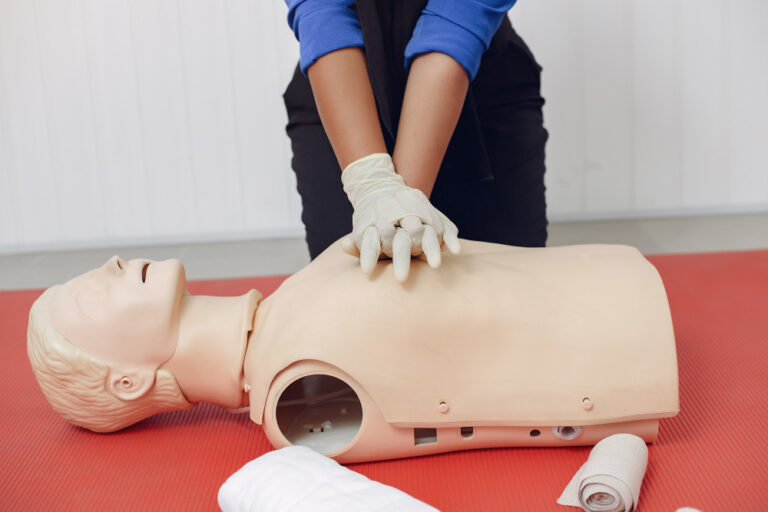
Standard 12 asks for practical basic life support training that meets Resuscitation Council UK guidelines. That part cannot be done by reading alone.
Who is the Care Certificate for?
It is for staff who are not on a professional register. The 2025 standards name roles such as care assistant, healthcare support worker, domiciliary care worker, support worker, personal assistant and senior care assistant.
Registered nurses and other registered professionals follow their own regulator's standards instead.
The standards are mainly for people new to care. Employers can also use them with existing staff to check gaps, using the self-assessment tool published with the 2025 standards.

What is the Level 2 Adult Social Care Certificate?
It is a regulated qualification built on the same 16 standards. The Care Certificate standards are not a qualification on their own.
The Department of Health and Social Care (DHSC) launched the Level 2 Adult Social Care Certificate (L2ASCC). It is regulated by Ofqual, the qualifications regulator for England. You are assessed while you work, and DHSC says it takes 6 to 8 months on average for someone new to care.
Swipe the table sideways to see every column.
| Item | Care Certificate standards | Level 2 Adult Social Care Certificate |
|---|---|---|
| What it is | A set of 16 induction standards | An Ofqual-regulated qualification |
| Legally required? | No | No |
| Assessed how | By your employer or assessor | By an approved learning provider, in your day-to-day work |
| Typical length | Set by the employer | 6 to 8 months on average (DHSC) |
| Portable between jobs? | Depends on the new employer | Yes, it is a recognised qualification |
| Funding | Employer cost | Up to £1,540 (est. US$2,050, an estimate. You are charged in pounds and your bank sets the final rate) per learner through the Learning and Development Support Scheme (England) |
The L2ASCC is open to learners aged 16 and over who are employed to provide adult care. International recruits can also enrol.
Can I take my Care Certificate to a new job?
Sometimes. Your new employer decides whether to accept your earlier induction.
Many employers ask new staff to repeat parts of it or to complete the self-assessment and fill gaps. This is one reason DHSC created the L2ASCC: as a qualification, it "will be recognised by different employers."
Example. Amina starts as a care assistant in a residential home in Leeds. Her manager gives her the Care Certificate self-assessment in week one. She rates herself "new to me" on safeguarding and basic life support, so those come first in her induction plan, with a practical basic life support session booked for her first month.
What does CQC look for?
CQC looks for evidence that staff are trained and competent for their role. A certificate alone is not enough.
Inspectors expect induction records, training records, supervision notes and competency checks. If you are a manager, see our guide to preparing staff training records for a CQC inspection.
Estimate. You’re charged in pounds (GBP); your bank sets the final rate.
FAQs
Do I need the Care Certificate before I apply for a care job?
No. Most employers in England expect you to complete the Care Certificate standards during your induction, after you start. Having studied the topics first can help at interview and makes induction quicker, but no law requires it before you apply for a care role.
How long does the Care Certificate take?
The official guidance does not set a fixed time. Your employer plans it as part of your induction. The separate Level 2 Adult Social Care Certificate qualification takes 6 to 8 months on average for people new to care, according to DHSC.
Do nurses need the Care Certificate?
No. The Care Certificate is designed for staff who are not on a professional register. Registered nurses follow the standards of the Nursing and Midwifery Council (NMC). A nurse working as a care assistant while waiting for registration may still be asked to complete it.
Does an online course give me the full Care Certificate?
An online course can cover the knowledge. Some standards, such as basic life support and moving people, need you to show practical skills, which your employer or assessor must observe in the workplace before signing you off.
Did the Care Certificate change in 2025?
Yes. The standards were updated in March 2025. There are now 16, including a new standard on awareness of learning disability and autism. Check that any training you take is based on the 2025 version.
Next step
Study online with the MySkillsPlace Care Certificate course. Then read mandatory training for care workers: the full list and download the free mandatory training checklist.
MySkillsPlace Care Certificate courseSources
The official guidance this page is based on. Check the source for the latest rules.
- Care Certificate standards updated 2025: self-assessment tool (DHSC, NHS England, Skills for Care, Skills for Health) (opens in a new tab)
- Care Certificate (Skills for Care) (opens in a new tab)
- Level 2 Adult Social Care Certificate: factsheet for care workers, version 3.0, March 2026 (DHSC) (opens in a new tab)
- Regulation 18: Staffing (CQC) (opens in a new tab)
- The Health and Social Care Act 2008 (Regulated Activities) Regulations 2014, regulation 18 (opens in a new tab)
Related courses and pathways
 Course · HealthcareCare CertificateThe induction standard for new health and social care workers in England, taught step by step across every standard.See the course: Care Certificate
 Course · HealthcareLevel 2 Safeguarding (Adult)Recognise abuse and neglect, know your duties and follow the right reporting steps.See the course: Level 2 Safeguarding (Adult)
 Course · HealthcareBasic Life SupportRespond to life-threatening emergencies with the core skills of basic life support.See the course: Basic Life Support
Keep reading
Care training6 min read
Funded and free training for care staff: what is available?
How the Learning and Development Support Scheme reimburses care employers in England, plus free e-learning options care staff anywhere can use.

Care training6 min read
How often does care training need renewing?
Most core care training is refreshed at least every 3 years, basic life support yearly. What is law, what is guidance, and what triggers an early refresh.
Care training5 min read
How often should staff refresh Basic Life Support training?
Resuscitation Council UK and Skills for Care both point to at least annual Basic Life Support updates. First aid certificates last three years.

PDF
Free download
The care worker mandatory training checklist
See every topic a care worker in England must cover, how often to refresh it, and what to keep as proof, on two pages.


